Buying Property in Rabat: The Capital's Quiet Case
30 September 2026 · 7 min read · Rabat · Morocco
Buying property in Rabat means buying into Morocco's seat of government rather than its fastest-growing city, and the 2024 census makes that distinction explicit. Rabat's own prefecture counted 515,619 people, down 62,208 people, or 11.3%, since 2014, even as the wider Rabat-Salé-Kénitra region kept growing around it. That is not a warning sign. It is the shape of the market: a capital built on ministries, embassies and two universities, sitting at the quiet centre of a metropolitan area doing almost all of its growing somewhere else.
We work with buyers based in Paris, Brussels, Montreal, London, Madrid and Dubai who choose Rabat precisely because it is not Casablanca or Marrakech. This is a guide to the geography and the practical checks, not a pitch for any one neighbourhood: who actually rents here, where the established money sits against the newer money, and what the census reveals about where the region is actually adding people.
None of this replaces a lawyer reading the actual title or a notary running the actual sale. It is the map you need before you bring either of them in.
Why "quiet" is the right word for this market
Rabat is Morocco's administrative and diplomatic capital: the royal palace, parliament, the ministries and the bulk of the foreign missions based in the country all sit here, rather than in Casablanca, which runs the country's commerce, or Marrakech, which runs its tourism. That single fact shapes everything else about the property market. Demand is anchored in salaried, often long-term postings, civil servants, diplomats, university staff and professionals attached to the institutions above, rather than in a tourist season or an export economy.
For a buyer, that means a rental market calmer than a resort town and less cyclical than a business hub tied to global trade. Tenants in Rabat's core districts tend to stay for a posting of several years rather than a fortnight, which suits an owner who does not want to manage turnover from abroad.
Who actually rents here: ministries, embassies and two universities
The tenant base in Rabat's central districts is built around people posted to the city rather than people choosing to live there for its own sake: ministry staff, foreign diplomatic missions, and academics tied to Mohammed V University in Agdal or the private Université Internationale de Rabat near the Bouregreg valley. That base rents well-located two and three-bedroom flats with parking and reliable building management far more consistently than it rents anything unusual or oversized.
The safest bet in Rabat is rarely the most striking property. A modern, well-managed flat on a street a diplomat's family or a visiting academic would recognise tends to find and keep a tenant faster than a larger or unusual property further from the institutions that drive demand.
Agdal and Hassan: the established core
Agdal is Rabat's grid of tree-lined streets around Mohammed V University, popular with professionals, academics and long-staying expatriates for its cafes, schools and walkable layout. Buildings here are mostly newer mid-rise blocks with titre foncier titles and an established syndic, which makes it one of the more straightforward parts of the city to manage from abroad.
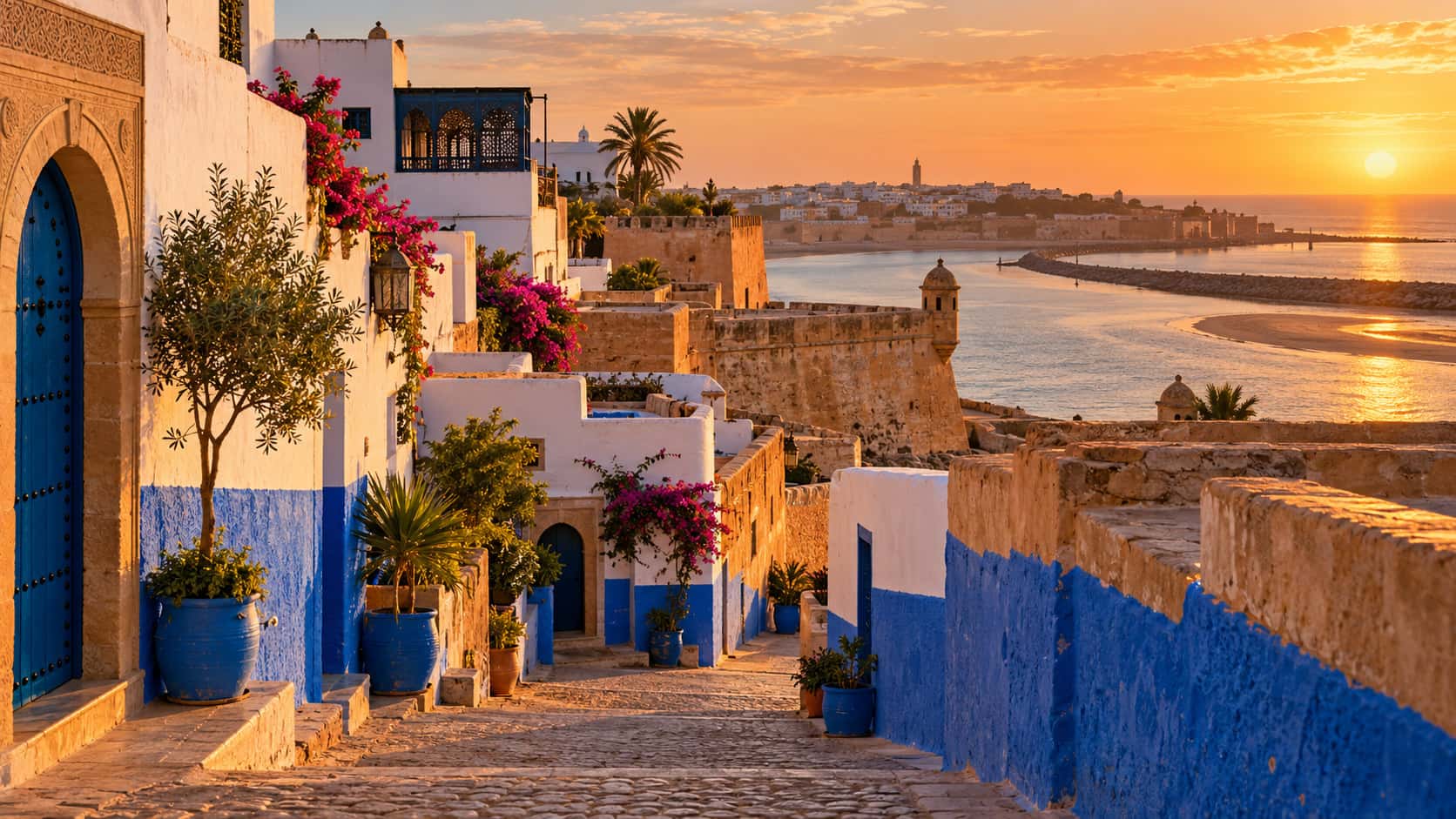
Hassan, closer to the river and the Kasbah of the Oudayas, is older and more administrative, sitting near the ministries and the Hassan Tower. Some of its older buildings still carry a pre-registration deed rather than a modern title, and knowing which one applies changes how safely a sale can actually go through, so it is worth confirming before agreeing a price on anything built before the more recent wave of development. Hassan and the older parts of the city also sit inside the perimeter UNESCO inscribed in 2012 as "Rabat, Modern Capital and Historic City: a Shared Heritage", which protects the character of these streets but can add extra planning steps to any renovation on a listed building.
Hay Riad and Souissi: where the newer money sits
Hay Riad is a planned district built up from the 1990s onward: wide avenues, gated villa compounds and modern apartment blocks aimed at returning MREs, senior civil servants and business owners who want more space and off-street parking than the older core offers. It is the newest large stock of housing in the city and generally the easiest to buy with a clean title.
Souissi, further out and closer to the royal palace, is Rabat's most expensive residential district, home to embassy residences, large private villas and some of the city's international schools. It suits a buyer looking for a family home or a long let to a senior diplomatic or corporate tenant rather than someone chasing rental turnover.
Why the capital's own population is falling while the region grows
The 2024 census carries a detail that matters more to a buyer than it first appears. The Rabat-Salé-Kénitra region grew by 551,773 people over the last decade, yet Rabat's own prefecture lost population over the same period, while Salé and Skhirate-Témara together accounted for a combined 57% of the region's growth. In plain terms, families and new households are settling around Rabat rather than inside its own boundaries, which are largely built out already.
That does not make central Rabat a weaker buy. It makes it a different kind of buy: a fixed, institutional tenant base inside a city with little room left to add housing stock, next to a metropolitan area doing all of the region's expanding a few kilometres away. A buyer chasing capital growth from new construction should look at Salé, Témara or Skhirate before assuming central Rabat can deliver it.
Salé and the Bouregreg valley: the twin city across the river
Salé, across the Bouregreg river from Rabat, counted 1,089,554 people at the 2024 census, more than double Rabat's own prefecture, and holds a historic medina alongside newer housing that is generally cheaper than equivalent stock in Rabat. It is connected to the capital by the Rabat-Salé tram, a 20km, 31-station network, according to the Agency for the Development of the Bouregreg Valley, the state body that has run the redevelopment of the river valley between the two cities since it was created in November 2005.
That agency's 6,000-hectare mandate, set out on its own site, covers new residential and cultural projects along both banks, gradually pulling Rabat and Salé together as one metropolitan area rather than a capital and a satellite. Salé is worth a serious look if the Rabat budget does not stretch far enough, provided the same title checks apply to any older property in its medina.
What to check before you commit
- Confirm whether a property carries a registered titre foncier or an older deed, especially in Hassan or the Salé medina, since establishing which one applies changes how the sale can proceed
- Get a full written breakdown of the fees before agreeing a price, since registration duty, land registry charges and the notary's own bill sit on top of the figure you agree with the seller
- Ask what the notary is actually responsible for checking before you sign anything, since the role covers far more than witnessing a signature
- If you plan to let the property while living abroad, check what living outside Morocco changes about the tax owed on a property you hold there before setting a rent
Buying in Rabat from abroad
The national ownership rules do not change from one Moroccan city to the next: a foreign buyer registers a title in their own name here exactly as they would in Casablanca or Marrakech, agricultural land aside. What Rabat adds is a market that rewards patience with the institutions that drive it. Understanding which ministry, embassy or university a given street actually serves tells you more about a property's letting prospects than its finish or its view.
If you want to see what is genuinely on the market before narrowing anything down, the WhatsApp group carrying Rabat's real listings as they appear is a faster way to get a feel for a street than any portal.
Frequently Asked Questions
Yes. The same national rule applies here as anywhere in Morocco: a foreign national can register a title in their own name with no residency requirement, with the one general exception of land classed as agricultural.
Want to see what's actually for sale in Rabat right now?
Listing portals lag behind the real market. Join the free WhatsApp community for Rabat to see Agdal flats, Hay Riad villas and Salé apartments as owners, agents and developers post them.
Join the Rabat Community