Buying Property in Tetouan and Martil: The Northern Coast Explained
12 October 2026 · 5 min read · Tetouan · Morocco
Buying property in Tetouan means choosing between two markets that sit minutes apart and behave nothing alike: a UNESCO-listed hill city that houses people who live and work there all year, and a coastal strip through Martil, Cabo Negro and M'diq that fills up every summer and empties out every autumn. The rules for a foreign buyer are identical wherever you look. What is different, completely, is who will actually want to live in what you buy, and for how many months of the year.
We work with buyers based in Paris, Brussels, Montreal, London, Madrid and Dubai, many with family roots in this corner of the north. This is the stretch of Morocco that generations of Moroccans left for Belgium, the Netherlands and northern France, and it is where a lot of them are now buying back in. Others simply want a seafront flat for August without pretending it will earn a wage the other eleven months.
None of this replaces a lawyer reading the actual title or a notary running the actual sale. It is the context to bring with you before you call either one in.
A UNESCO medina that still works as a town
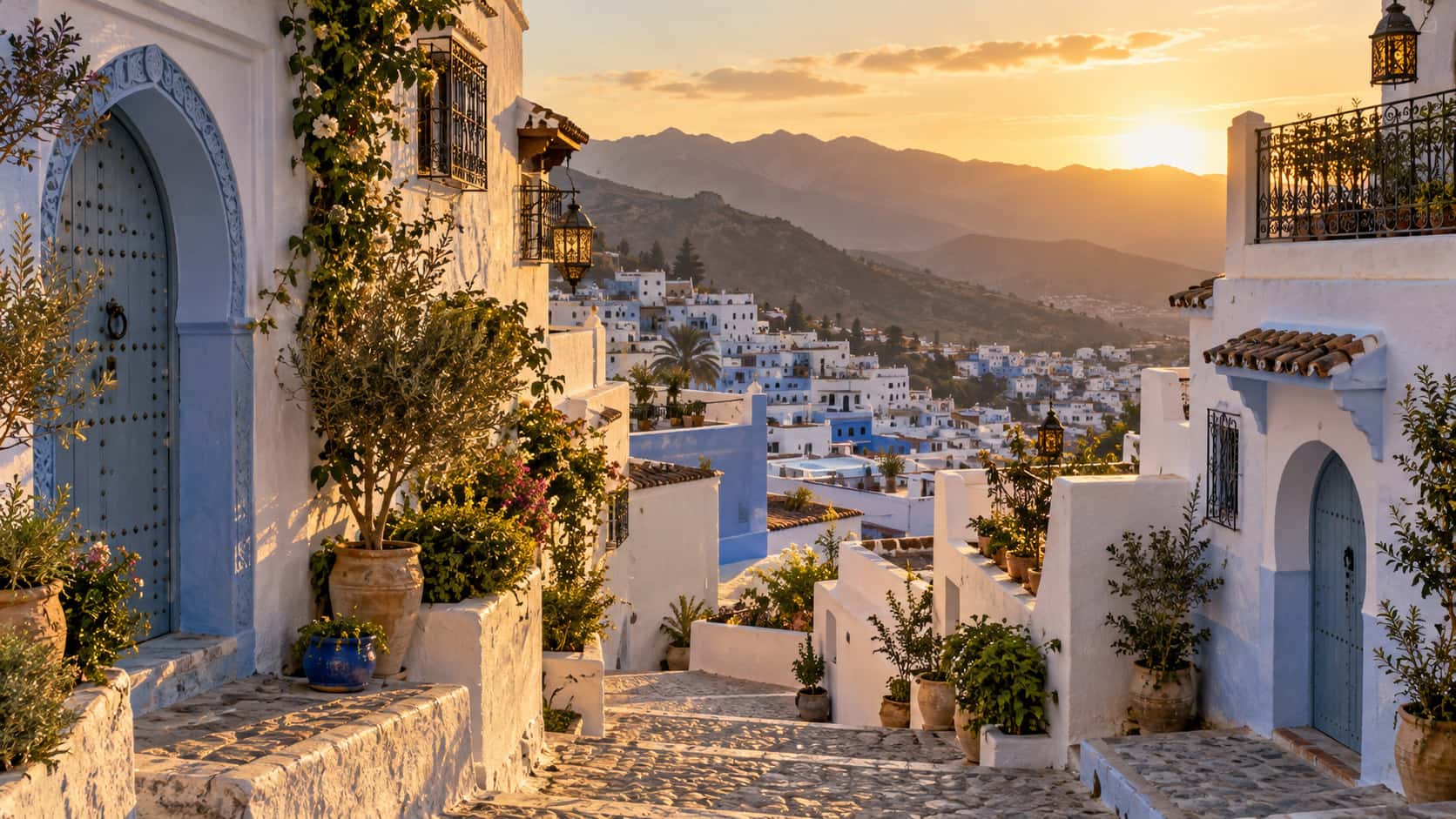
Tetouan's old city was inscribed by UNESCO as the Medina of Tétouan, listed under its historic name Titawin, in 1997 (whc.unesco.org). UNESCO's own description calls it one of the smallest Moroccan medinas but the most complete, a fortified town built against the Rif mountains and facing the Strait of Gibraltar, largely rebuilt from the late Islamic period onward by Andalusian refugees whose influence still shows in its ironwork, plasterwork and housefronts. The listing is a large part of why the old city has stayed shielded from later redevelopment, which is also why buyers tend to describe it as feeling more lived-in than some of Morocco's more tourist-heavy medinas.
That history has a practical edge for a buyer. Property inside the walls more often sits on melkia, a traditional deed, rather than on a titre foncier, the registered title that gives the strongest legal protection, and knowing which one you are looking at changes how safe the purchase actually is. The national ownership rules for a foreign buyer do not change street by street: they are set once for the whole country. What you can actually prove about one specific house very much does change, house by house.
Martil, Cabo Negro and M'diq: one coast, three characters
South along the coast, Martil is Tetouan's beach: a grid of apartment blocks behind a long sandy front that belongs to Tetouan families for two months and sits mostly quiet the rest of the year. Cabo Negro, a few minutes further on, is the gated, golf-adjacent version of the same idea, built for a steadier, higher-spending slice of the same summer crowd. M'diq, past Cabo Negro towards the Tanger Med corridor, is different again: a working fishing port with its own marina that has been growing a resident population, not just a seasonal one.
That resident growth is measurable. The M'diq-Fnideq prefecture, which covers M'diq, counted 254,064 residents at the 2024 census, up from 209,897 in 2014, a rise of roughly 21% over the decade, according to Morocco's High Commission for Planning. Growth has slowed from the previous decade (1.93% a year, against 4.08% between 2004 and 2014), but it is still growth, and it tells you M'diq is not purely a seasonal town the way Martil and Cabo Negro are.
The province behind all three is still growing
Zoom out and the demand base is bigger than any one town. Tétouan province grew at an average 1.07% a year between the 2014 and 2024 censuses, a touch below the 1.26% recorded for the wider Tanger-Tétouan-Al Hoceïma region but above the 0.85% national rate, and it remains the region's second most populous province or prefecture after Tanger-Assilah, according to the same High Commission for Planning data. The region as a whole reached 4,030,222 residents in 2024, up from 3,556,729 in 2014, the HCP's own regional note shows.
None of that is a yield forecast. We hold no verified market dataset for either the city or the coast, and asking prices move block by block and season by season, so we will not put a number on either here. What the census does tell you is that the people who might eventually rent from you, port and marina staff, teachers, families who commute into Tetouan or Tangier, are a growing group, not a shrinking one.
Before you buy: what actually needs checking here
Two things decide whether a Tetouan or Martil purchase goes smoothly, and neither is unique to the region. They just matter more here, because older titles inside the medina and off-plan coastal developments are both common.
- Confirm whether the title is a titre foncier or melkia before you agree a price, not after, and get a lawyer who knows medina titles specifically to read it.
- Run the same checklist you would use on any resale in Morocco: charges against the property, the boundaries, and who is actually named on the title.
- Add registration duty, land registry charges and the notary's own fee to whatever price you negotiate; none of them sit inside the asking price.
- Treat a seafront flat in Martil or Cabo Negro as what it is: a family home that happens to earn for a short season, not a year-round investment with a family attached to it.
Frequently Asked Questions
Generally, yes, and that gap is much of the appeal for buyers priced out of Tangier. What you give up by moving north is Tangier's year-round tenant base: Tetouan city itself still lets all year, but Martil and Cabo Negro trade on a short summer season instead.
Want to see what's actually for sale in Tetouan and Martil right now?
Listing portals lag behind the real market. Join the free WhatsApp community for Tetouan and Martil to see medina houses, seafront flats and new-build apartments as owners, agents and developers post them.
Join the Tetouan Community