Renting Out Your Moroccan Property From Abroad: Long-Let vs Short-Let
29 September 2026 · 7 min read · Renting · Morocco
Renting out a property in Morocco from abroad comes down to one decision before any other: sign a long-term lease with a single tenant, or run the place as a short-term letting for travellers. Both are legal. Both can be managed while you live in Paris, Brussels, Montreal or Dubai. Both put rent into a Moroccan bank account you can eventually move home. What each one asks of you day to day, and the paperwork it requires before you take a first tenant or a first guest, are almost nothing alike.
We manage both kinds of letting for owners who are not in the country, and the question we get asked first is never "which one earns more." It is "which one stops being my problem the moment I hand over the keys." That is the better question. The income gap between a long let and a well-run short let in the same building is usually smaller than owners assume, and the workload gap between them is not.
This piece sets out what a standard Moroccan lease actually locks you into, when a furnished rental to travellers crosses into a separately licensed activity, and how the rent itself gets from a tenant's pocket to your account abroad.
Long-let or short-let: the trade-off that actually decides it
A long let suits a property in a place where people live and work year-round: a Casablanca or Rabat apartment near offices, a family home in a residential suburb, anywhere the tenant pool is people building a life there rather than visitors passing through. Sign one tenant for a year, collect rent monthly, and the biggest event in your calendar is renewing or ending the contract.
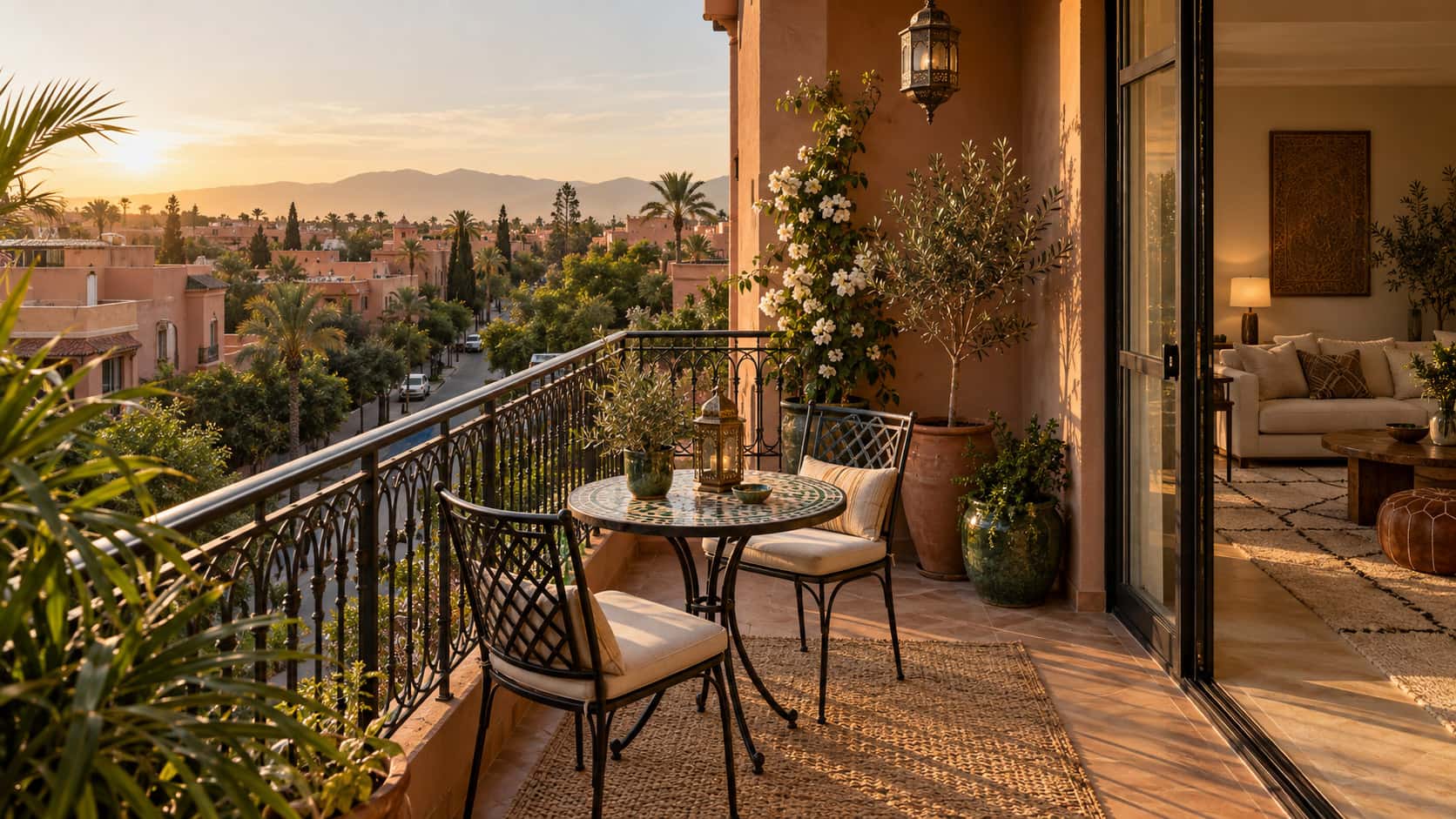
A short let suits a property where people go on holiday: a riad in a medina, a flat near a beach, a place with a view worth photographing. It comes with a licence to hold before you start, a cleaner to manage between every guest, and a phone that has to be answered on a Friday night when you are seven time zones away.
Neither choice is permanent, and owners switch between the two more often than the property portals suggest, usually after underestimating how much a short let asks of whoever is meant to be managing it from a different country. If you would rather hand that daily load to someone else, we run exactly this for owners abroad, and can tell you honestly which model actually fits your property before you commit to either.
What a standard lease actually locks you into
Once you choose a long let, the rules are not really yours to rewrite. Loi 67-12 governs the relationship between landlord and tenant for residential leases in Morocco, and as of 2026 it still sets the floor under every contract you sign, whatever your own lease template says. Under Article 3 of the law, only a written contract with a fixed date gives you access to the simplified court procedure for recovering the property if a tenant stops paying. A verbal agreement, or an undated one, pushes any dispute into the ordinary civil courts instead, which takes longer to resolve and matters more when you are managing it from abroad.
The law also sets a floor under the property itself and the tenancy that runs on it. Under Article 5, the premises must have a working kitchen, sanitary facilities, and electricity and water connected, before you can let it at all. Where you take a security deposit, the same law caps it at two months' rent, and ending the tenancy needs at least two months' formal notice, delivered through a bailiff or a registered letter rather than a phone call or a text message.
Where the place is genuinely a second home let out only occasionally to people you trust, the day-to-day feel is looser, but the underlying obligations do not relax just because you are not counting on the income.
When "furnished for travellers" becomes a different licence
A short-term letting to travellers is not a lighter version of the same lease. As of 2026, Loi 80-14 on tourist establishments folds any furnished dwelling let for short stays to travellers, a riad, an apartment advertised on a booking platform, a guesthouse, into the same regulatory family as classified hotels. Under Article 30 of that law, operating one of these forms of accommodation requires an authorisation issued against a set of specifications, before you can legally take a first booking.
The Ministry of Tourism's own portal confirms the law now covers "les établissements touristiques et les autres formes d'hébergement touristique," meaning it is not limited to buildings that look like hotels. A furnished flat let by the week through an app sits inside that definition as much as a riad with a sign above the door, whatever a booking platform's own listing rules assume.
Treat the authorisation as a precondition, not paperwork you can catch up on once the bookings start arriving. An unauthorised short let is not a grey area you happen to be operating in. It is an activity the law has already named and already regulates, whether or not enforcement has reached your street yet.
Getting the rent back to where you live
Whichever model you choose, the money still has to travel from a tenant in Morocco to an account you can actually use. That part is more straightforward than owners expect. The Office des Changes lists rental income, "les revenus locatifs," explicitly among the investment income a foreign investor or an MRE can transfer out of Morocco, alongside dividends and loan interest. As of 2026, that is the same convertibility principle that applies when you eventually sell the property: the right to transfer travels with how the underlying investment was funded, not with a separate approval you apply for every time rent comes in.
That does not make the rent tax-free at either end. Rental income earned in Morocco is taxable in Morocco, with filing obligations that sit apart from the annual property taxes you already owe. And letting the place out, rather than living in it yourself, changes how that annual property tax is worked out in the first place, since the reduction built into it is reserved for a home you or close family actually occupy. Get a Moroccan accountant to set up the filing before the first tenant moves in, not after the first rent payment lands.
Running it without setting foot in the country
A long let, once the tenant is in and the contract is signed, runs itself for months at a time. What breaks that quiet is exactly what you would expect: a boiler that fails on a weekend, a tenant who stops paying, a renewal date that arrives while you are dealing with something else entirely. None of it needs you in Morocco personally, but all of it needs someone who is.
A short let never has a quiet month. Every guest needs a clean handover, every booking needs someone managing the calendar and the platform messages, and every awkward situation, a lost key, a noise complaint, a guest who overstays, lands on whoever holds the other set of keys. Owners who try to run this themselves from another country usually manage it for one summer before handing it to somebody local.
Either way, treat "who has a key and answers the phone" as a decision you make before you list the property, not after something has already gone wrong. And before you assume a place will let easily either way, look at what is actually moving in your specific city: the WhatsApp community for that market tells you more about real demand than any general rule in this article.
Frequently Asked Questions
Yes, if the guests are travellers staying short-term. Under Article 30 of Loi 80-14, running a furnished short-term letting for travellers requires an authorisation from the relevant municipal or prefectural authority before you take bookings, whatever platform you advertise it on.
Weighing up long-let against short-let?
The right answer depends on your property, your city and how hands-off you actually want to be. Talk it through with a consultant who manages exactly this for owners abroad every day before you commit to either.
Speak to a Consultant